


“Wet weather, damp skin, fungal infections — know how to protect your skin.”
The rainy season brings cooler weather and a break from the heat — but for your skin, all that extra moisture creates a different kind of problem. Rainy season skin problems, especially fungal skin infections, tend to spike whenever humidity rises.
Wet shoes, damp socks, sweaty clothes, and humid skin folds create the warm, moist conditions certain fungi need to grow. That’s why fungal skin infections such as athlete’s foot and ringworm become so much more common during rainy weather.
And no — getting a fungal infection does not mean you have poor hygiene. Anyone can develop one. Moisture, sweating, friction, close contact, shared towels or clothing, and walking barefoot on contaminated wet surfaces can all increase the risk.
Why Does Rainy Weather Cause More Skin Problems?
Think about what happens to your skin when it stays wet for hours. It becomes softer and more easily irritated. Add heat, sweating, friction, and poor air circulation, and you get the perfect environment for fungi and yeasts to multiply.
This is especially common between the toes, around the groin, in the armpits, and in other skin folds.
When skin stays moist, it can become macerated — soft, pale, and more fragile. Moisture and friction then contribute to small cracks and irritation, weakening the skin’s protective barrier.
But moisture isn’t the only factor. Fungal skin infections can also spread through direct skin contact or contaminated surfaces — towels, clothing, wet floors, and shared changing areas.
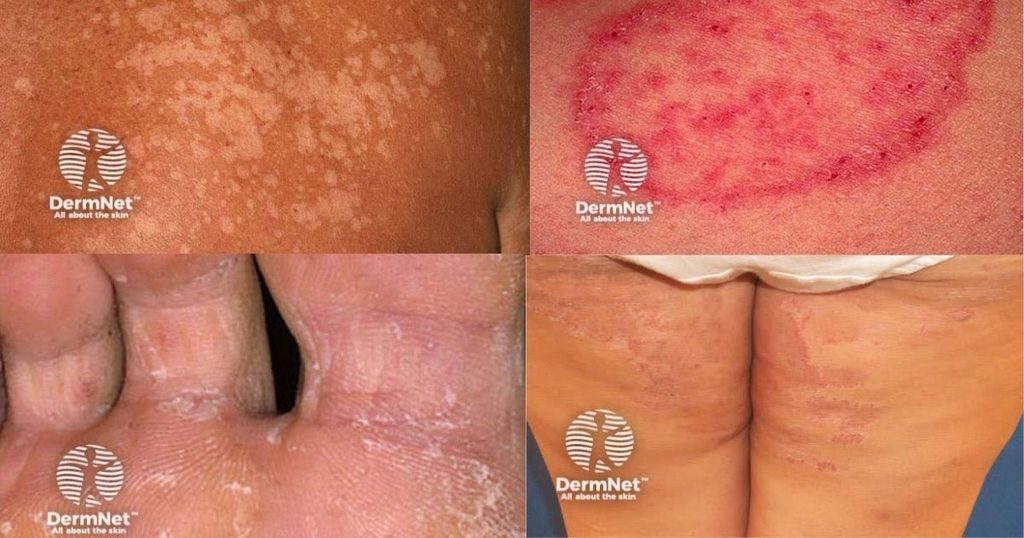
+Reference from: https://dermnetnz.org/images
The Most Common Rainy Season Skin Problems
1. Athlete’s Foot (Tinea Pedis)
An athlete’s foot affects the feet, especially the spaces between the toes. Signs to watch for:
- Itching or burning
- Peeling or scaling skin
- White, soggy-looking skin between the toes
- Cracks or soreness
Damp socks, sweaty footwear, tight shoes, and walking barefoot in shared wet areas all increase the risk. And despite the name, you don’t have to be an athlete to get it.
2. Jock Itch (Tinea Cruris)
Jock itch is a fungal infection affecting the groin and nearby skin. It causes an itchy, red or darker rash that may spread onto the upper thigh. Sweating, tight clothing, and warm, humid conditions increase the risk.
Keeping the area dry and changing out of sweaty or wet clothing promptly can help reduce the risk.
3. Yeast Infection in Skin Folds
A yeast called Candida normally lives on the skin without causing problems. But when skin stays warm and moist — especially in skin folds — it can overgrow and cause infection. Look for:
- Bright-red, irritated skin
- Moist or peeling areas
- Small red spots around the edge of the rash
- Burning or itching
This is more likely wherever skin rubs against skin and moisture becomes trapped.
4. Tinea Versicolor
Tinea versicolor is different from athlete’s foot and ringworm. It’s caused by an overgrowth of a yeast that normally lives on the skin, producing lighter or darker patches — often on the chest, back, neck, or shoulders.
These patches may have fine scaling and become more noticeable after sun exposure, since affected skin doesn’t tan the same way as surrounding skin. Warm, humid conditions can make this condition more noticeable or recurrent.
How to Prevent Fungal Skin Infections During Rainy Season
You don’t need a complicated routine — a few simple habits make a real difference.
Keep your skin dry. After showering or getting caught in the rain, dry yourself properly, especially between the toes and in skin folds. Don’t just wipe off the water and get dressed.
Change out of wet clothes. If socks, underwear, or clothes get soaked from rain or sweat, change as soon as you can. The same applies to damp socks after a day in closed shoes.
Let your shoes dry completely. Wet footwear creates a warm, enclosed environment around your feet. Alternate between pairs so each one gets time to dry out fully.
Be careful in shared wet areas. Fungi spread easily through contaminated floors and shared items. Wear footwear in communal showers, changing rooms, and other damp public spaces, and avoid sharing towels, socks, or clothing.
Don’t scratch. Scratching damages the skin and can let bacteria cause a secondary infection. If an area is very itchy, ask a pharmacist about appropriate treatment instead of scratching.
Is Every Itchy Rash During Rainy Season a Fungal Infection?
No — and this matters. An itchy, red, peeling, or irritated rash can have many causes. It could be a fungal infection, but it could also be eczema, contact dermatitis, a bacterial infection, psoriasis, or another skin condition.
Even skin-fold rashes can have several different causes — intertrigo, for example, may be inflammatory, infectious, or both. So if you’re not sure what you’re looking at, don’t automatically assume it’s fungal.
What About Antifungal Creams?
Many uncomplicated superficial fungal infections respond well to topical antifungal medicines, but the right treatment depends on the type of infection and where it’s located. Common antifungal ingredients include clotrimazole and miconazole.
Avoid using a steroid cream on a rash that might be fungal — steroids can change how a fungal infection looks and make it harder to recognize and treat. If you’re unsure whether a rash is fungal, ask a pharmacist or healthcare professional before treating it yourself.
When Should You See a Doctor or Pharmacist?
Get professional advice if:
- The rash is spreading quickly
- The area becomes very painful, hot, swollen, or starts producing pus
- The rash is extensive or keeps coming back
- Symptoms aren’t improving with treatment
- The infection involves the scalp or nails
- You have diabetes or a weakened immune system
- You’re not sure whether the rash is actually fungal
A healthcare professional can often diagnose a typical fungal infection by its appearance, though a skin scraping or lab test may be needed when the diagnosis isn’t clear.
FAQ: Rainy Season Skin Problems
- Why does my skin get itchy and irritated more often in the rainy season?
Prolonged moisture softens the skin’s surface and weakens its barrier, while heat, sweat, and friction create ideal conditions for fungi and yeast to grow — especially in skin folds and between the toes.
- Can I prevent an athlete’s foot if I have to wear wet shoes often?
Alternate between two or more pairs of shoes so each has time to dry fully, change socks as soon as they’re damp, and dry your feet thoroughly — including between the toes — every time they get wet.
- Is a fungal skin infection contagious?
Yes. It can spread through direct skin contact or through contaminated towels, clothing, and surfaces like wet floors in shared showers or changing rooms.
- How long does it take for a fungal skin infection to clear up?
Mild cases often improve within a few weeks of consistent antifungal treatment, but recovery time varies by infection type and location. See a pharmacist if there’s no improvement or symptoms worsen.