


Natural doesn’t always mean risk-free. Always check before combining supplements with medicines.
Many people take dietary supplements to support their health, improve nutrient intake, or address specific health concerns. Vitamins, minerals, herbal products, and other supplements are often used alongside prescription medicines and over-the-counter medications.
But did you know that some supplements can change how medicines work?
Certain supplements may reduce a medicine’s effectiveness, increase its effects or side effects, or raise the risk of harmful reactions. These interactions can occur even when a supplement is commonly used or marketed as a natural product.
Understanding potential supplement–medicine interactions is an important step toward using both safely. Let’s explore how these interactions happen, which combinations require caution, and how you can reduce the risks.
What Is a Supplement–Medicine Interaction?
A supplement–medicine interaction occurs when a dietary supplement affects how a medicine works in the body, or when a medicine affects the way a supplement works.
Dietary supplements include vitamins, minerals, herbal products, amino acids, and other products intended to supplement the diet. Although some supplements can be beneficial when used appropriately, they are not suitable for everyone or every situation.
Interactions may affect how much medicine enters the bloodstream, how quickly the body breaks it down, or how strongly it acts. As a result, a medicine may become less effective or cause more side effects than expected.
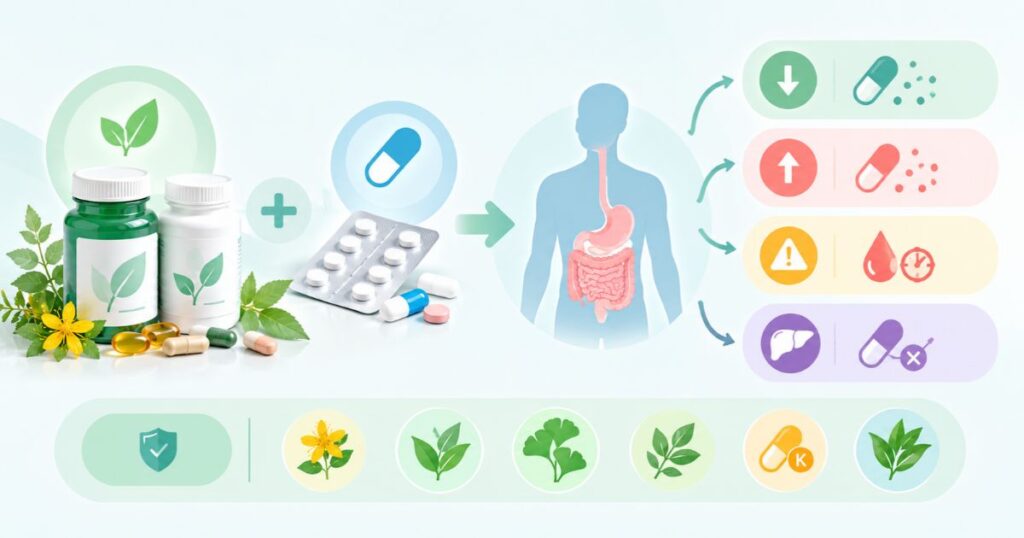
How Can Supplements Interact With Medicines?
Supplement–medicine interactions generally occur in several ways.
1. They may reduce a medicine’s effectiveness
Some supplements can affect how the body absorbs or breaks down certain medicines. This may lower the amount of medicine available in the body, potentially reducing its effectiveness.
For example, St. John’s wort, an herbal supplement sometimes used for mood-related concerns, can reduce the effectiveness of several medicines, including certain hormonal contraceptives, antidepressants, and other prescription drugs.
2. They may increase the effects or side effects of a medicine
Some supplements can increase a medicine’s concentration or influence its effects. Depending on the combination, this may increase the likelihood of unwanted side effects or other complications.
For example, taking St. John’s wort with certain antidepressants can increase the risk of serious serotonin-related side effects.
3. They may increase the risk of harmful reactions
Some combinations can affect important body functions, such as blood clotting or blood glucose control. These effects may be especially concerning for people taking medicines that require careful monitoring.
The type and severity of an interaction depend on the supplement, the medicine, the dose, and the individual’s health.
Common Supplements That May Interact With Medicines
Not every supplement interacts with every medicine. However, some combinations are well documented and deserve particular attention.
St. John’s wort and certain medicines
St. John’s wort is an herbal supplement used for various mood-related concerns. It can speed up the processes that break down certain medicines, potentially reducing their effectiveness.
It may interact with some antidepressants, hormonal contraceptives, anticoagulants such as warfarin, certain heart medicines, and some medicines used to treat HIV or cancer.
What to know: Anyone taking prescription medicines should consult a pharmacist or doctor before using St. John’s wort because some interactions can be serious.
Vitamin K and warfarin
Vitamin K plays an important role in blood clotting. Warfarin is an anticoagulant that works by interfering with vitamin K-dependent clotting processes.
Changes in vitamin K intake can affect how well warfarin works. This is particularly relevant when a person begins or stops a vitamin K supplement or makes a substantial change to their usual intake.
What to know: People taking warfarin should discuss vitamin K supplements with their healthcare professional and keep their dietary vitamin K intake consistent. They should not eliminate vitamin K-containing foods without professional advice.
Ginkgo biloba and blood thinners
Ginkgo biloba is an herbal supplement commonly marketed for memory and other health concerns. It may increase the risk of bleeding when used with anticoagulants such as warfarin.
The evidence and risk can vary depending on the product and the individual, so this combination should be reviewed by a healthcare professional.
What to know: If you take a blood thinner, tell your pharmacist or doctor before starting ginkgo biloba or any other herbal supplement.
Concentrated green tea extract and certain medicines
Green tea extract supplements contain concentrated compounds from green tea. Unlike ordinary green tea consumed as a beverage, concentrated extracts may have different effects and risks.
Research has found that green tea can reduce blood levels of nadolol, a medicine used to treat high blood pressure and certain heart conditions. Green tea extract may also affect the levels of some other medicines.
What to know: Tell your healthcare professional if you use green tea extract, particularly if you take regular prescription medicines.
These examples illustrate why checking supplements–medicine combinations matters. There is not a complete list, and the absence of a known interaction does not necessarily mean a combination is safe.
Who Should Be Especially Careful?
Although anyone taking medicines may need to consider potential interactions, certain groups should take particular care:
- People taking multiple medicines: The more medicines and supplements you use, the more potential combinations may need to be reviewed.
- People taking medicines that require close monitoring: Examples include warfarin, digoxin, and certain medicines used after organ transplantation.
- People with chronic health conditions: Some supplements may affect disease control or interfere with treatment.
- Pregnant or breastfeeding individuals: Some supplements may not be suitable during pregnancy or breastfeeding, and safety information may be limited.
- People preparing for surgery: Certain supplements may affect bleeding, blood pressure, or responses to anaesthesia and other medicines.
If any of these situations apply to you, ask a healthcare professional to review your supplements before starting, stopping, or changing them.
How Can You Reduce the Risk of Supplement–Medicine Interactions?
You do not necessarily need to avoid all supplements if you take medicines. The important thing is to choose them carefully and use them appropriately.
Here are some practical steps to help reduce the risk.
1. Tell your pharmacist or doctor about everything you take
Include prescription medicines, over-the-counter medications, vitamins, minerals, herbal products, traditional remedies, and other supplements. Products used occasionally are also worth mentioning.
2. Check before starting a new supplement
Do not assume that a supplement is safe simply because it is widely available or marketed as natural. Ask whether it is suitable for your health condition and current medicines.
3. Read the product label
Check the ingredients, serving size, recommended dose, and warnings. Some products contain several active ingredients, which can make potential interactions harder to identify.
4. Do not rely on separating doses by a few hours
Taking a supplement and medicine at different times may help with certain absorption-related interactions, but it does not prevent all interactions. Some supplements affect how the body processes medicines for longer periods.
Follow the specific advice given by your pharmacist or doctor.
5. Do not stop prescribed medicines on your own
If you are concerned about an interaction, speak with your healthcare professional before making changes. Stopping a prescribed medicine without guidance may cause your condition to worsen or lead to other complications.
6. Keep an updated list of your medicines and supplements
Record each product’s name, dose, and how often you take it. Bring this list to pharmacy visits, medical appointments, and hospital visits so your healthcare team can check for potential interactions.
When Should You Consult a Pharmacist or Doctor?
Ask a pharmacist or doctor for advice before starting a supplement if you take prescription medicines, have a chronic condition, or are unsure whether two products can be used together.
You should also seek advice if you notice unexpected symptoms after starting a new supplement or changing a dose. Depending on the symptoms, prompt medical assessment may be necessary.
Seek emergency medical care if you experience severe symptoms such as difficulty breathing, swelling of the face or throat, fainting, severe bleeding, or other signs of a serious reaction.
A pharmacist can help review your medicines and supplements, identify potential interactions, and advise whether a product should be avoided or whether monitoring is needed.
Frequently Asked Questions
- Can I take vitamins with my prescription medicines?
Many vitamins can be used alongside prescription medicines, but safety depends on the specific vitamin, dose, medicine, and your health. Some vitamins can affect certain treatments, so check with a pharmacist or doctor before adding a supplement.
- Is it safe to take supplements and medicines at the same time?
Sometimes it is, but not every combination is safe. Some interactions affect absorption, while others affect how medicines are broken down or how they work. A healthcare professional can help determine whether the combination is appropriate and whether the timing needs to be adjusted.
- Are herbal supplements safer because they are natural?
No. Natural products can contain active substances that affect the body and interact with medicines. Herbal products may also vary in their ingredients and concentrations. Always check before combining them with medication.
- Should I stop taking my supplements if I start a new medicine?
Not necessarily. Some supplements may be appropriate to continue, while others may need to be avoided or monitored. Tell your pharmacist or doctor about everything you take before starting the new medicine, and follow their advice.
- Can supplements interact with over-the-counter medicines?
Yes. Interactions can occur with non-prescription medicines as well as prescription drugs. If you regularly take an over-the-counter medicine, check with a pharmacist before adding a supplement.