


When it comes to melatonin, more is not better. The goal is to nudge your internal clock, not override it. Starting with the lowest effective dose respects your body’s delicate chemistry while minimizing next-day grogginess.
What Is Melatonin?
Melatonin is a naturally occurring hormone that helps regulate your sleep-wake cycle. It is produced by the pineal gland in the brain, usually increasing in the evening as your body prepares for sleep and reaching its peak around midnight.
Because melatonin production requires darkness, exposure to light—such as night lights or screens from electronic devices—or frequently staying up late can suppress melatonin secretion, disrupt your body clock, and lead to insomnia. For this reason, some people consider melatonin supplements to help improve sleep.
How Can Melatonin Help?
Melatonin can be particularly beneficial if you experience:
- Difficulty falling asleep due to jet lag
- Irregular sleep schedules, such as shift work or late-night routines
By taking melatonin at the right time, you may be able to fall asleep faster and improve overall sleep quality.
Choosing the Right Dosage
Melatonin supplements come in various doses, typically 1mg to 10mg. The goal is to use the lowest effective dose to help you sleep.
- First-time users: Start with 1–2mg taken 30 minutes before bedtime.
- If needed: Increase gradually to 3–5mg.
- Above 5mg: Consult your doctor before increasing the dose.
Remember, more is not always better finding the right dose is key.
Does Melatonin Really Work?
The effectiveness of melatonin varies between individuals. Not all insomnia is caused by low melatonin levels. If your sleep problems are due to stress, anxiety, or other medical conditions, melatonin may not help.
It’s important to identify the root cause of insomnia before relying on supplements.
Can I Take Melatonin with Sleeping Pills?
Do not combine melatonin with prescription sleeping pills or replace your current medications without consulting your doctor. Doing so may affect the safety and effectiveness of your treatment.
Is Long-Term Use Safe?
There is currently no strong evidence supporting the long-term safety of melatonin. Certain groups should avoid melatonin unless advised by a healthcare professional:
- Pregnant or breastfeeding women
- People with weakened immune systems
- People with liver or kidney impairment
For everyone else, melatonin can be used short-term to help reset your sleep pattern or manage jet lag, but overuse is not recommended.
Tips for Better Sleep
Beyond supplements, try to improve your sleep naturally:
- Establish a regular sleep routine
- Limit screen time before bed
- Create a dark, comfortable sleep environment
- Address underlying sleep problems rather than relying solely on supplements
With the right habits and careful use of melatonin, you can enjoy a good night’s sleep and wake up refreshed.
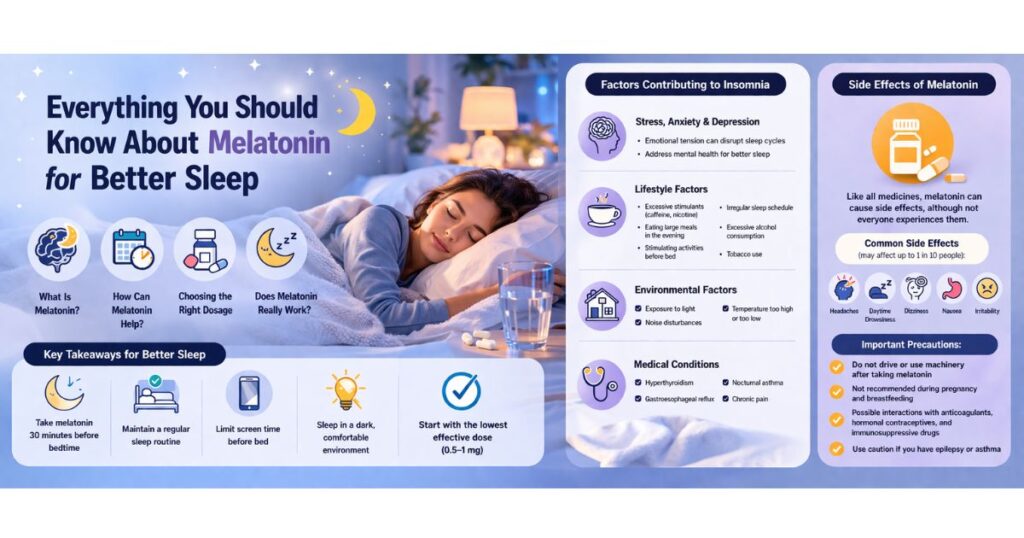
Factors contributing to insomnia
• Stress, anxiety and depression.
• Lifestyle factors:
– excessive consumption of stimulants;
– eating too much in the evening;
– engaging in stimulating activities in the evening;
– irregular lifestyle;
– excessive alcohol consumption;
– tobacco use.
• Environmental factors:
– light;
– noisy environment;
– temperature too high or too low.
• Medical conditions:
– hyperthyroidism;
– gastroesophageal reflux;
– nocturnal asthma;
– chronic pain.
Side effect of Melatonin
Melatonin – Side effects (medication leaflet)
Like all medicines, melatonin can cause side effects, although not everyone experiences them.
Common (may affect up to 1 in 10 people): Headaches, daytime drowsiness, dizziness, nausea, irritability.
Important precautions:
Do not drive or use machinery after taking this medicine
Not recommended during pregnancy and breastfeeding
Possible interactions with anticoagulants, hormonal contraceptives and immunosuppressive drugs
Caution in patients with epilepsy or asthma