


Not every allergy is an emergency but knowing when it is can save a life.
Most allergic reactions are mild and can cause symptoms such as itching, sneezing, a rash, or mild swelling. But sometimes an allergic reaction can become serious very quickly.
The most severe type is called anaphylaxis, and it can be life-threatening.
Knowing the warning signs can help you recognize when a pharmacy visit is not enough and urgent hospital care is needed.
When Is an Allergic Reaction an Emergency?
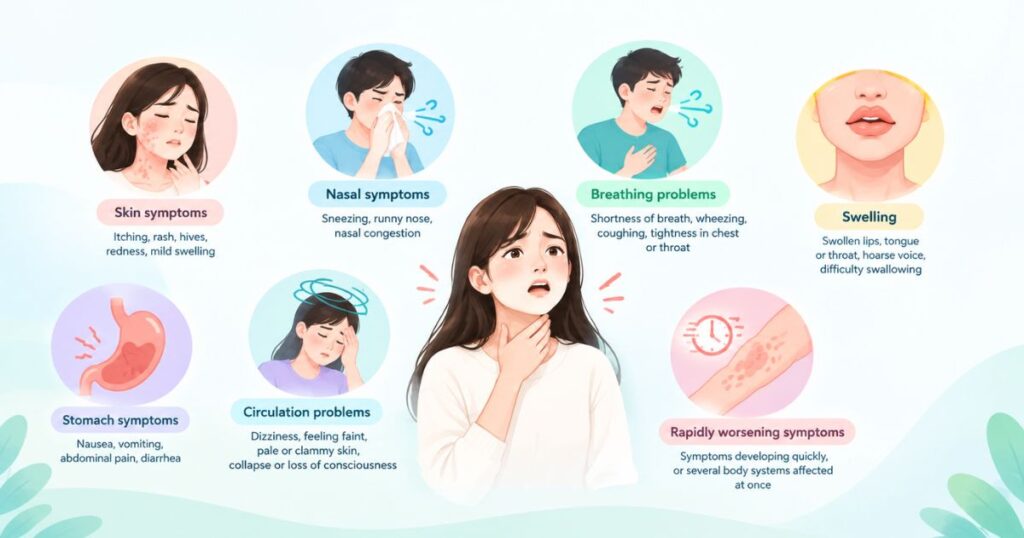
Go to the hospital immediately if a reaction causes any of these symptoms:
Difficulty breathing
- Shortness of breath
- Wheezing
- Persistent coughing
- Tightness in the throat or chest
- Difficulty speaking or swallowing
Swelling of the mouth or throat
- Swollen tongue or lips
- Swelling or tightness in the throat
- Hoarse voice
Problems with circulation
- Severe dizziness
- Feeling faint or suddenly very weak
- Pale or clammy skin
- Collapse or loss of consciousness
Severe stomach symptoms
- Repeated vomiting
- Severe abdominal pain
- Severe diarrhea
Rapidly worsening symptoms
If symptoms are developing quickly, or several parts of the body are affected at once — for example, hives together with breathing difficulty or dizziness — treat it as an emergency.
You don’t need to wait for every symptom to appear.
What Should You Do?
1. Get emergency medical help immediately. Go to the nearest hospital or call emergency services. Don’t wait to see if it improves on its own.
2. If the person has a prescribed epinephrine (adrenaline) auto-injector, use it immediately according to their emergency action plan. Epinephrine is the first-line treatment for anaphylaxis.
3. Even if symptoms improve after epinephrine, still go to the hospital. Symptoms can return after the first dose wears off — sometimes hours later. This is called a biphasic reaction. Epinephrine buys time; it doesn’t end the emergency.
4. If symptoms don’t improve within 5–10 minutes and a second auto-injector is available, a second dose may be needed — follow the person’s emergency plan or instructions from emergency dispatch.
5. Help the person into a safe position:
- Feeling faint, dizzy, or weak → help them lie flat and raise their legs.
- Trouble breathing → let them sit up in whatever position is easiest to breathe in; don’t force them flat.
- Vomiting or losing consciousness → turn them onto their side.
Don’t let them stand or walk, even if they insist they feel fine — collapse can happen suddenly.
6. Stay with them until help arrives. Anaphylaxis can worsen quickly, and someone needs to be there to notice if it does — or to give a second dose of epinephrine if needed.
7. Don’t rely on antihistamines alone. They may ease itching or hives, but they don’t treat the breathing or circulation problems that make anaphylaxis dangerous.
What If It’s Only a Mild Reaction?
Mild symptoms — a few itchy spots, mild redness, sneezing, or localized swelling — may not be an emergency.
Still, watch the person closely. Reactions can escalate. If breathing difficulty, throat swelling, dizziness, or repeated vomiting appear, seek emergency care immediately.
No Rash Doesn’t Mean No Anaphylaxis
Many people expect hives or a rash to accompany a severe reaction. But anaphylaxis can happen without any visible skin symptoms. Don’t wait for a rash before seeking help if someone develops serious breathing, throat, or circulation symptoms after possible allergen exposure.
What Can Cause a Severe Allergic Reaction?
- Foods such as peanuts, tree nuts, eggs, milk, fish, and shellfish
- Certain medicines
- Bee and wasp stings
- Latex
- Other individual allergens
A person who’s had a mild reaction before can still have a severe one later — past mild reactions don’t predict future severity.
Quick Reference: Go Immediately If :
Breathing difficulty, Throat or tongue swelling, Dizziness, fainting, or collapse, Rapidly worsening symptoms, More than one body system affected
When in doubt, seek emergency medical care. Every minute matters.
FAQ
1. What is anaphylaxis?
Anaphylaxis is a severe, potentially life-threatening allergic reaction that can develop quickly. It may affect breathing, the throat, circulation, the skin, or the digestive system.
2. Can anaphylaxis happen without a rash?
Yes. Anaphylaxis does not always cause hives or other visible skin symptoms. Serious breathing difficulty, throat swelling, dizziness, fainting, or rapidly worsening symptoms should be treated as an emergency even without a rash.
3. When should I go to the hospital for an allergic reaction?
Seek emergency medical care immediately if someone develops difficulty breathing, swelling of the tongue or throat, severe dizziness or fainting, collapse, rapidly worsening symptoms, or symptoms affecting more than one body system.
4. What should I do if someone is having anaphylaxis?
Get emergency medical help immediately. If the person has a prescribed epinephrine auto-injector, use it according to their emergency plan. Keep them in a safe position, stay with them, and do not let them stand or walk. Even if symptoms improve, they still need hospital evaluation.
5. Can a mild allergic reaction become severe?
Yes. A previous mild reaction does not guarantee that future reactions will remain mild. Monitor the person closely and seek emergency care immediately if breathing problems, throat swelling, dizziness, fainting, or repeated vomiting develop.