


Prevent mosquito bites. Know the warning signs. Act early.
Dengue fever is one of the most common mosquito-borne illnesses in tropical countries, including Cambodia. Cases often increase during the rainy season when mosquitoes have more places to breed. While many people recover within one to two weeks, dengue can become serious if warning signs are ignored.
What Is Dengue Fever?
Dengue fever is a viral infection caused by the dengue virus. It spreads through the bite of an infected Aedes mosquito, mainly Aedes aegypti and Aedes albopictus.
These mosquitoes are most active during the early morning and late afternoon, but they can bite throughout the day.
Unlike the common cold or influenza, dengue does not spread from person to person through coughing, sneezing, or physical contact.
How Does Dengue Spread?
A mosquito becomes infected after biting a person who has the dengue virus in their blood. After several days, that mosquito can pass the virus to another person through its bite.
Aedes mosquitoes usually lay their eggs in clean, stagnant water found in places such as:
- Flower pots
- Water storage containers
- Buckets
- Old tires
- Bottles and cans
- Roof gutters
- Pet water bowls
Even a small amount of standing water is enough for mosquitoes to breed.
Common Symptoms of Dengue Fever
Symptoms usually begin 4 to 10 days after an infected mosquito bite.
Common symptoms include:
- Sudden high fever
- Severe headache
- Pain behind the eyes
- Muscle and joint pain
- Nausea or vomiting
- Skin rash
- Extreme tiredness
- Mild bleeding from the nose or gums
Some people experience only mild symptoms, while others become seriously ill.
Warning Signs That Need Immediate Medical Care
The most dangerous stage of dengue often begins when the fever starts to come down, usually between day 3 and day 7 of illness.
Seek medical attention immediately if you notice any of the following:
- Severe abdominal pain
- Persistent vomiting
- Vomiting blood
- Black or bloody stools
- Bleeding from the gums or nose
- Difficulty breathing
- Extreme weakness or unusual drowsiness
- Restlessness or confusion
- Cold, pale, or clammy skin
- Little or no urine
These warning signs may indicate severe dengue, which requires urgent medical treatment.
Home Care for Mild Dengue
Most people with mild dengue can recover safely at home with supportive care. There is no specific medicine that cures dengue, so treatment focuses on relieving symptoms and preventing dehydration.
Get plenty of rest
Your body needs time to recover. Avoid strenuous activities until you feel well again.
Drink enough fluids
High fever and vomiting can lead to dehydration.
Good choices include:
- Water
- Oral rehydration solution (ORS)
- Soup or broth
- Coconut water
- Fresh fruit juice (without too much added sugar)
Drink small amounts regularly, especially if you do not feel like eating.
Use paracetamol for fever and pain
Paracetamol is generally recommended to reduce fever and relieve body aches when used according to the recommended dose.
Follow the instructions on the medicine label or ask your pharmacist if you are unsure about the correct dose.
Medicines to Avoid
Some pain relievers can increase the risk of bleeding during dengue infection.
Avoid taking:
- Aspirin
- Ibuprofen
- Naproxen
- Diclofenac
- Other non-steroidal anti-inflammatory drugs (NSAIDs), unless advised by a doctor
If you are already taking blood-thinning medicines or have other medical conditions, speak with your doctor before stopping or changing any medication.
How to Prevent Dengue Fever
The best protection against dengue is preventing mosquito bites and reducing mosquito breeding around your home.
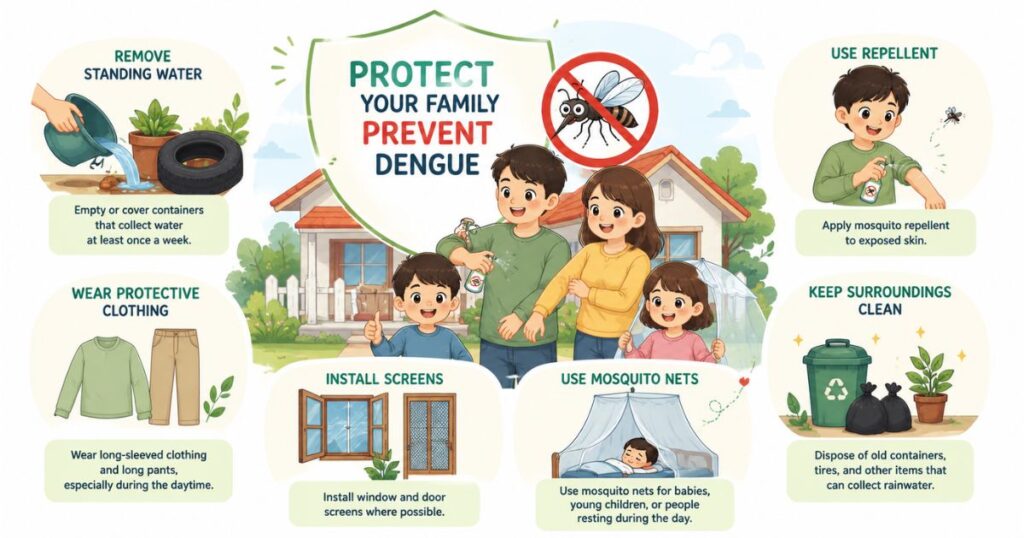
Remove standing water
Empty or cover containers that collect water at least once a week.
Protect yourself from mosquito bites
- Apply mosquito repellent to exposed skin.
- Wear long-sleeved clothing and long pants, especially during the daytime.
- Install window and door screens where possible.
- Use mosquito nets for babies, young children, or people resting during the day.
Keep your surroundings clean
Dispose of old containers, tires, and other items that can collect rainwater.
Community efforts are important because mosquitoes can breed in nearby homes and public areas.
Who Is More Likely to Develop Severe Dengue?
Anyone can develop severe dengue, but the risk may be higher in:
- Infants and young children
- Older adults
- Pregnant women
- People with weakened immune systems
- People who have had dengue before
These individuals should seek medical advice early if they develop symptoms.
When Should You Visit a Doctor?
Visit a healthcare provider if:
- Your fever lasts more than two or three days.
- You cannot drink enough fluids.
- You vomit repeatedly.
- Your symptoms become worse instead of better.
- You notice any warning signs of severe dengue.
- You are pregnant, elderly, or have a chronic medical condition.
Early medical assessment can help reduce the risk of complications.
FAQ
- Can dengue spread from one person to another?
No. Dengue spreads through the bite of an infected mosquito, not through casual contact with another person.
- Can I get dengue more than once?
Yes. There are four different types of dengue virus. Infection with one type does not provide lifelong protection against the others.
- Do antibiotics treat dengue?
No. Dengue is caused by a virus, so antibiotics are not effective unless there is a separate bacterial infection.
- How long does dengue fever last?
Most people recover within one to two weeks, although tiredness may continue for several weeks after the fever has gone.
- Is it safe to stay at home?
People with mild symptoms may recover at home if they stay well hydrated, rest, and are monitored closely. However, anyone who develops warning signs should seek medical care immediately.