

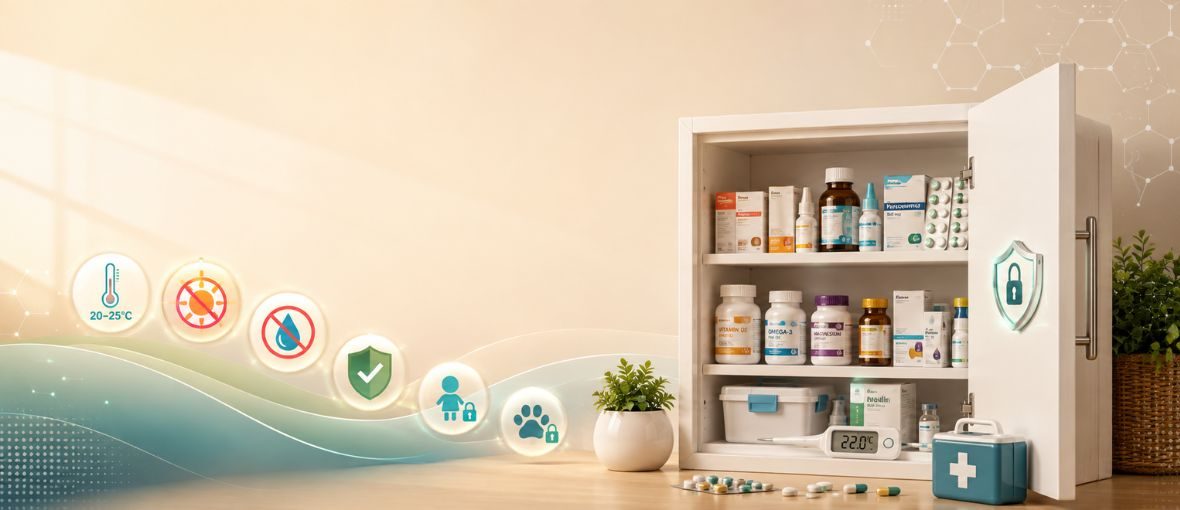
The right storage keeps medicines safe, effective, and ready when you need them.
Whether it’s daily vitamins, over-the-counter pain relievers, or specialized prescription drugs, almost every home has a collection of medicines. But where and how you store them can mean the difference between a life-saving treatment and a safety hazard.
In improper conditions, medicines can lose their potency long before the expiration date or worse, become a risk for accidental child or pet poisoning.
Here is your straightforward guide to storing, inspecting, and disposing of medications safely at home.
1. Why Storing Your Meds Correctly Matters
When medications are exposed to harsh environments or left unsecured, two main problems arise:
- Lost Potency (Ineffectiveness): Active ingredients in pills, creams, and liquids break down when exposed to heat, humidity, air, or sunlight. A degraded antibiotic or blood pressure pill may no longer deliver the correct dose, putting your health at risk.
- Safety Hazards: Unsecured medicine cabinets are a primary cause of accidental home poisonings, particularly involving curious young children, pets, or unintended users.
2. The Worst Places to Store Medicine
Myth Buster: Despite its name, the bathroom medicine cabinet is actually the worst place to keep your drugs.
Avoid These Common Danger Zones:
- Bathrooms & Near Sinks: Steam and humidity from showers rapidly break down capsules and pills, causing them to degrade prematurely.
- Kitchen Stoves & Windowsills: Heat from cooking appliances and direct sunlight destroy active chemical compounds.
- Unconditioned Spaces: Storage areas subject to extreme temperature swings (garages, sunrooms, or near heaters) destroy drug stability.
The Ideal Storage Spot:
Store room-temperature medicines in a cool, dry, climate-controlled space (such as a bedroom closet shelf or hallway cabinet) away from light, heat, and moisture.
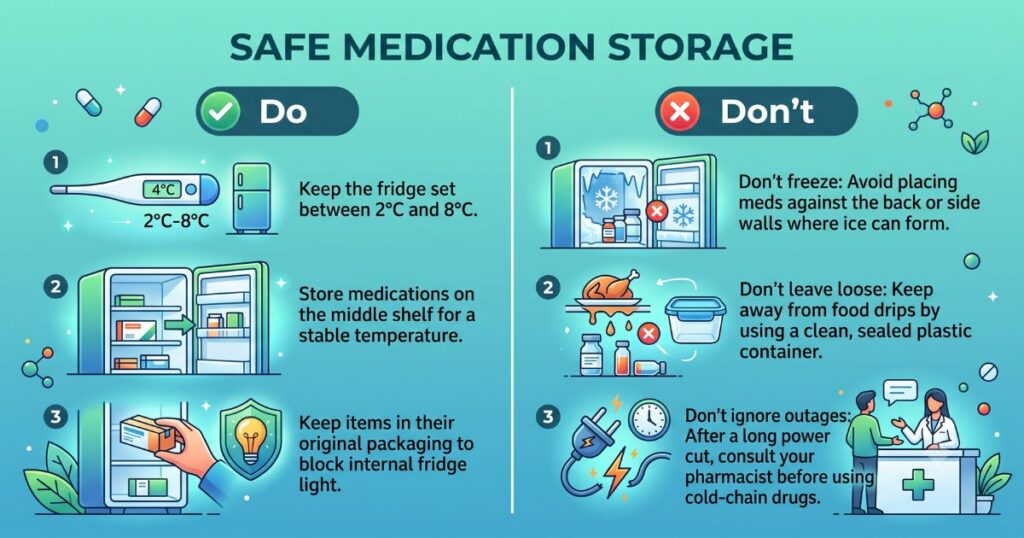
3. Fridge Rules: Storing Cold Medications Properly
Certain eye drops, creams, ointments, and injectable medications (like insulin) require cold storage to remain active. Always check the label for the phrase “Keep Refrigerated.”
4. Child & Pet Safety: Locking Up & Mindful Habits
Preventing accidental ingestion requires active habits every single day.
- Lock It Up: Elevating medicines isn’t always enough for determined toddlers or pets. Use a locked box, cabinet, or tamper-resistant safe for all prescriptions and potent over-the-counter items.
- Keep Original Packaging: Child-resistant caps and blister packs add a crucial layer of defense. If using a daily pill organizer, keep the entire organizer inside a locked container.
- Never Use “Candy” Vocabulary: Refrain from calling medicine “candy,” “sweets,” or “juice” to trick children into taking it. This creates dangerous confusion if they find the bottle later.
- Adult Administration Only: Always measure and give medications to young children yourself, never let them handle bottles independently.
5. Visual Checklist: How to Tell If Medicine Has Gone Bad
Even prior to the expiration date, improper storage can ruin a medication. Instantly stop using and consult a pharmacist if you notice any of these signs:
- Color Changes ➜ Faded, darkened, or unexpected spots
- Texture Shifts ➜ Pills feel soft, sticky, unusually hard, or cracked
- Clumping ➜ Capsules or tablets stick together in a clump
- Odor Changes ➜ Development of a sour, vinegar-like, or unexpected smell
- Separation ➜ Liquids, creams, or ointments have separated and won’t mix when shaken
FAQ
1. Is it safe to store my medicine in a daily pill organizer?
Yes, for short-term use (e.g., a week’s worth of doses), pill organizers are excellent for medication adherence. However, they are not airtight and often lack child-resistant features. Always keep your pill organizer stored in a cool, dry, and locked location, away from children and pets. For long-term storage, keep medications in their original, labeled pharmaceutical packaging.
2. What should I do if I accidentally left my refrigerated medicine out on the counter?
Do not assume it is still safe or effective. Some medications (like insulin or certain antibiotics) degrade rapidly at room temperature. Place the medication back in the fridge immediately, but do not use it until you have called your pharmacist. We can check the manufacturer’s stability data to tell you if the dose is still safe or if it must be discarded.
3. Can I store my inhalers or emergency pens in my car?
No. Cars experience extreme temperature fluctuations reaching well over 50°C in the sun which can damage the pressurized canisters in inhalers or cause chemical degradation in emergency pens (like epinephrine auto-injectors). Always keep rescue medications with you in a bag or at room temperature in your home, never in a parked vehicle.
4. How long after the expiration date can I still take my medicine?
You should not take medication past its expiration date. The expiration date is the manufacturer’s guarantee of the drug’s full potency and safety. After this date, the chemical composition may change, making the medicine less effective or potentially toxic. If you find expired medication in your cabinet, please bring it to your nearest UCare Pharmacy for safe disposal.