


Morning sickness is a normal part of many pregnancies, but effective relief starts with simple daily habits.
For many women, one of the earliest signs of pregnancy isn’t a growing baby bump, it’s nausea.
Despite the name, “morning sickness” can strike at any time of the day. It affects up to 70% of pregnant women and is most common during the first trimester. While the symptoms can range from mild nausea to frequent vomiting, most cases improve as pregnancy progresses.
Why Does Morning Sickness Happen?
Experts don’t fully understand the exact cause, but hormonal changes during early pregnancy are believed to play a major role. Rising levels of human chorionic gonadotropin (hCG) and estrogen may contribute to nausea and vomiting.
Some women experience only mild symptoms, while others may find that nausea interferes with daily activities, work, or eating habits.
Start with Hydration
One of the biggest concerns during morning sickness is dehydration.
When nausea makes drinking difficult, taking large glasses of water at once can sometimes worsen symptoms. Instead, try taking small sips frequently throughout the day.
Many women find that cold drinks are easier to tolerate than warm beverages. Ice water, chilled fruit-infused water, or electrolyte drinks may be more appealing when nausea is at its worst.
The goal isn’t to drink a large amount at once, it’s to stay hydrated consistently throughout the day.
Eat Small Meals More Often
An empty stomach can often make nausea worse.
Rather than eating three large meals, many healthcare providers recommend smaller meals and snacks every few hours. Keeping some food in the stomach may help reduce feelings of nausea.
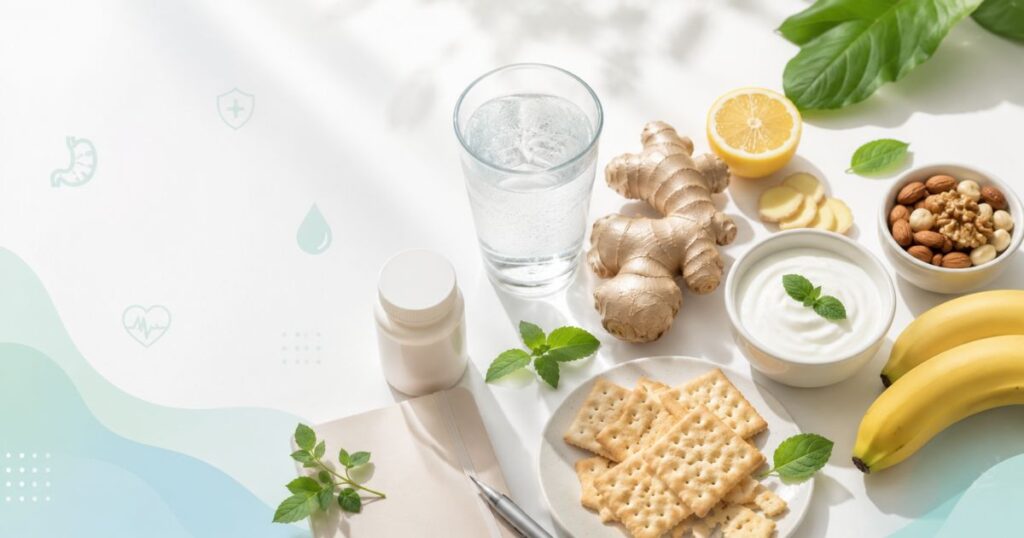
Simple foods such as crackers, toast, rice, bananas, or plain cereals are often easier to tolerate when symptoms flare up.
Some women also find it helpful to eat a small snack before getting out of bed in the morning.
Choose Protein-Rich Snacks
Research suggests that protein may help stabilize blood sugar levels and reduce nausea in some pregnant women.
Consider snacks such as:
- Greek yogurt
- Cheese
- Nuts
- Boiled eggs
- Peanut butter on crackers
Cold foods are often better tolerated because they have less odor, which can be helpful since strong smells frequently trigger nausea during pregnancy.
Avoid Common Triggers
Certain foods can make symptoms worse.
Fatty, greasy, spicy, or heavily seasoned foods tend to stay in the stomach longer and may increase nausea. Strong cooking odors can also be problematic.
While every woman is different, keeping a simple food diary can help identify personal triggers and make them easier to avoid.
Don’t Lie Down Right After Eating
Lying flat immediately after a meal can increase stomach discomfort and worsen nausea.
Try remaining upright for at least 30 to 60 minutes after eating. A short walk or simply sitting comfortably can help digestion and may reduce symptoms.
Can Ginger Really Help?
Yes! ginger is one of the most studied natural remedies for pregnancy-related nausea.
Multiple clinical studies have found that ginger may help reduce nausea and vomiting in early pregnancy. Many women use ginger tea, ginger candies, ginger capsules, or fresh ginger added to warm drinks.
While ginger is generally considered safe during pregnancy, it’s still a good idea to discuss supplements with your healthcare provider.
When Lifestyle Changes Aren’t Enough
Sometimes dietary changes and home remedies aren’t enough to control symptoms.
Healthcare providers often recommend vitamin B6 (pyridoxine) as a first-line treatment. In some cases, a combination of doxylamine and vitamin B6 may be prescribed, which has been widely studied and is considered safe for use during pregnancy when taken as directed by a healthcare professional.
Never start medications during pregnancy without discussing them with your doctor, pharmacist, or maternity care provider.
When Should You Seek Medical Help?
Morning sickness is common, but severe vomiting is not something you should ignore.
Contact your healthcare provider if you:
- Cannot keep fluids down for more than 24 hours
- Show signs of dehydration
- Feel dizzy or faint
- Lose weight during pregnancy
- Vomit multiple times a day
- Notice dark-colored urine or reduced urination
In some cases, severe pregnancy-related vomiting may be a condition called hyperemesis gravidarum, which requires medical treatment.
What Really Matters
Morning sickness is a normal part of pregnancy for many women, especially during the first trimester. Although it can be frustrating and exhausting, simple strategies such as staying hydrated, eating small frequent meals, choosing protein-rich snacks, avoiding trigger foods, and using ginger may help reduce symptoms.
If symptoms become severe or make it difficult to eat and drink normally, don’t try to push through it alone. Speak with your healthcare provider, as safe and effective treatment options are available.
FAQ
1. When does morning sickness usually start and end?
Morning sickness often begins around week 6 of pregnancy and is usually most noticeable during the first trimester. For many women, symptoms improve between weeks 12 and 16, although some may experience nausea for longer.
2. What foods are best to eat when you have morning sickness?
Small, frequent meals are often easier to tolerate than large meals. Bland foods such as crackers, toast, rice, bananas, and plain cereals can help. Protein-rich snacks like Greek yogurt, cheese, nuts, and boiled eggs may also reduce nausea for some women.
3. Is ginger safe for morning sickness during pregnancy?
Yes. Ginger is one of the most studied natural remedies for pregnancy-related nausea and is generally considered safe when consumed in moderate amounts. Ginger tea, fresh ginger, or ginger candies may help relieve symptoms. Always speak with your healthcare provider before taking ginger supplements.
4. When should I see a doctor for morning sickness?
Contact your healthcare provider if you cannot keep fluids down for more than 24 hours, have signs of dehydration, feel dizzy or faint, lose weight during pregnancy, or experience frequent vomiting. These symptoms may indicate a more serious condition, such as hyperemesis gravidarum, which requires medical treatment.
5. Can I take medicine for morning sickness while pregnant?
Yes, but only under the guidance of a healthcare professional. If lifestyle changes are not enough, your doctor or pharmacist may recommend vitamin B6 (pyridoxine) or a combination of doxylamine and vitamin B6, which are commonly used and considered safe during pregnancy when taken as directed.