

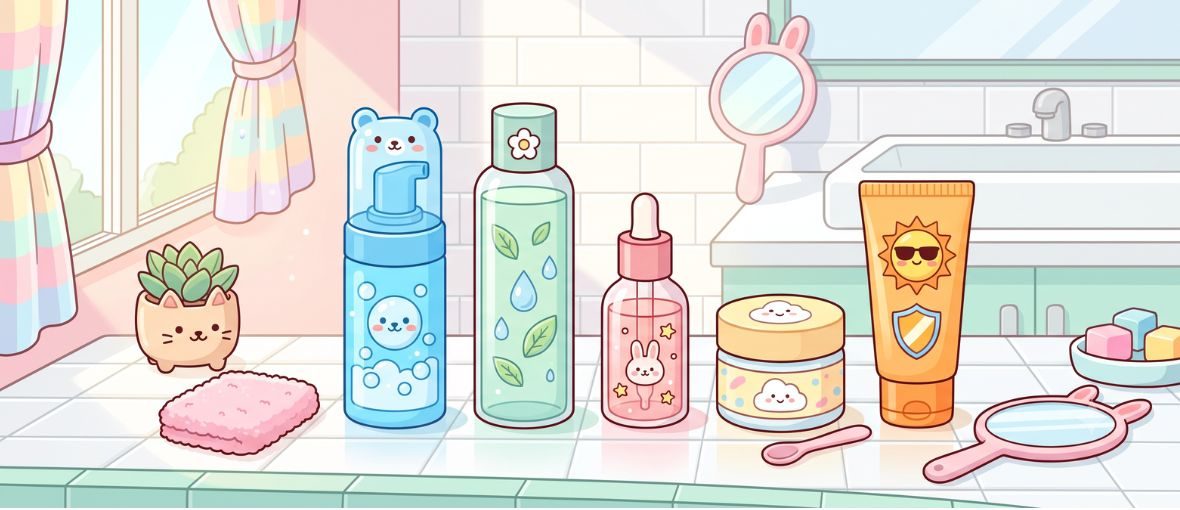
“Healthy skin is a numbers game where less is often more. It’s about consistency, not complexity.”
Introduction
Korean beauty, better known as K-beauty, has become one of the most influential forces in the global skincare industry. From innovative ingredients to a philosophy built around prevention rather than correction, K-beauty has reshaped how millions of people around the world think about skin health.
But behind the viral trends and 10-step routines lies a much deeper story, one rooted in centuries-old tradition, modern dermatological science, and a genuine cultural obsession with healthy, radiant skin.
A Brief History of Korean Skincare
Korean skincare traditions date back centuries, long before the term “K-beauty” existed. Ancient practices, often referred to as hanbang (traditional Korean herbal medicine), used natural ingredients such as ginseng, rice, and medicinal plants to nourish and protect the skin. These remedies were passed down through generations and formed the foundation of a culture that views skincare as a daily ritual rather than a quick fix.
In the early 2000s, Korean skincare began gaining international attention thanks to the rise of Korean pop culture — often called the “Korean Wave” or Hallyu. As K-pop and K-dramas spread across Asia and eventually the world, global audiences became curious about the glowing, dewy skin showcased by Korean celebrities. This curiosity opened the door for Korean beauty brands to expand internationally, and by the 2010s, K-beauty had become a worldwide phenomenon.
What Makes Korean Skincare Different?
One reason K-beauty became popular worldwide is its focus on prevention and hydration rather than correction. Instead of waiting for wrinkles, dark spots, or dryness to appear, Korean skincare philosophy encourages daily habits that help maintain healthy skin over time.
This includes:
- Consistent sunscreen use
- Gentle cleansing
- Regular moisturization
- Hydration-focused formulas
- Protecting the skin barrier
These principles are supported by dermatologists worldwide and aren’t unique to Korea. However, Korean brands helped make these habits more accessible and enjoyable through lightweight textures and innovative ingredients like snail mucin, Centella asiatica, and fermented extracts.
The Truth About the 10-Step Korean Skincare Routine: Do You Really Need It?
If you’ve ever searched for skincare advice online, you’ve probably come across the famous “10-step Korean skincare routine.”
The idea is simple: layer multiple products, cleansers, toners, essences, serums, ampoules, moisturizers, and more to achieve healthy, glowing skin.
For some people, it sounds like the secret to flawless skin. For others, it sounds exhausting.
But here’s the question many skincare experts and consumers are now asking: Do you really need 10 products to have healthy skin?
The short answer is no.
Where Did the 10-Step Routine Come From?
The 10-step routine became popular as Korean beauty, often called K-beauty, expanded globally. It wasn’t originally intended as a strict daily checklist. Instead, it showcased the wide variety of skincare products available in Korea and emphasized taking time to care for the skin.
Over time, social media and beauty influencers transformed it into a skincare challenge of sorts, leading many people to believe that more products automatically mean better results.
In reality, skincare is not a numbers game.
More Products Doesn’t Always Mean Better Skin
It’s easy to assume that layering more products will produce better results. However, skin doesn’t necessarily work that way.
Using too many active ingredients at once can sometimes lead to:
- Skin irritation
- Redness
- Dryness
- Increased sensitivity
- Breakouts
Dermatologists often see patients whose skin problems started after introducing too many products too quickly.
Healthy skin is usually the result of consistency, not complexity.
What Does Your Skin Actually Need?
For most people, a simple routine is enough.
1. A Gentle Cleanser
Cleansing removes dirt, oil, sunscreen, and makeup that accumulate throughout the day.
The goal is to clean the skin without leaving it feeling tight or stripped.
2. A Moisturizer
Moisturizers help support the skin barrier and reduce water loss.
Even people with oily skin can benefit from an appropriate moisturizer.
3. Sunscreen
If there is one product dermatologists consistently recommend, it’s sunscreen.
Daily sun protection helps prevent premature aging, dark spots, and reduces the risk of skin cancer.
Many experts consider sunscreen the most important anti-aging product available.
4. A Targeted Treatment (Optional)
Depending on your skin concerns, you may choose to add one treatment product, such as:
- Niacinamide for oil control and pigmentation
- Vitamin C for antioxidant protection
- Retinoids for acne and aging concerns
- Salicylic acid for acne-prone skin
- Azelaic acid for redness and discoloration
Not everyone needs all of these. The best treatment depends on individual skin concerns.
What About Toners, Essences, and Serums?
These products can be useful, but they are not mandatory.
A hydrating toner may help dry skin. An essence may provide additional hydration. A serum may deliver concentrated active ingredients.
The key is understanding why you’re using a product rather than adding it simply because it appears in a popular routine.
Every product should serve a purpose.
Why Do Some People Love Multi-Step Routines?
For some individuals, skincare is more than a health habit—it’s a form of self-care.
There is nothing wrong with enjoying a longer routine if:
- Your skin tolerates the products well
- Each product serves a purpose
- You’re not experiencing irritation
- The routine fits your lifestyle and budget
The problem arises when people feel pressured to buy products they don’t need.
Signs You May Be Overdoing Your Skincare
Your skin may be telling you to simplify if you notice:
- Stinging when applying products
- Persistent redness
- Increased sensitivity
- Unexpected breakouts
- Flaking or excessive dryness
Sometimes the solution isn’t adding another product—it’s removing a few.
Top Korean Beauty Brands to Know
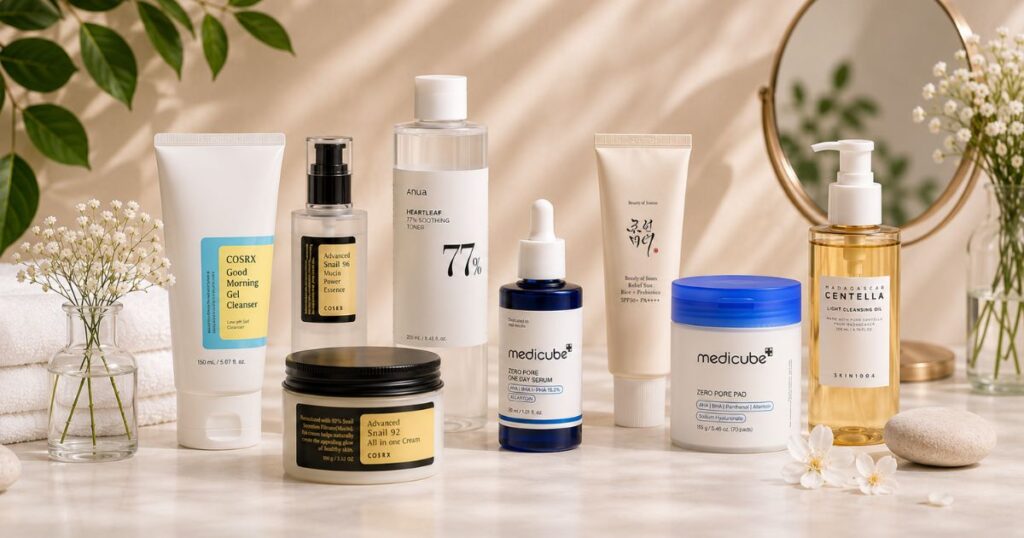
K-beauty’s global success is built on brands that combine innovation, tradition, and proven results. Here are five of the most influential names in Korean skincare today.
1. COSRX
COSRX is highly regarded for its minimalistic formulas built around high-efficacy active ingredients like snail mucin, AHA, and BHA. The brand specifically targets sensitive and acne-prone skin. Its standout product, the Acne Pimple Master Patch, is a hydrocolloid treatment designed for fast healing and blemish protection.
2. Anua
Anua follows a “skin-first” philosophy, focused on soothing and hydrating the skin while maintaining a healthy skin barrier. The brand’s identity centers on Heartleaf (Houttuynia cordata), a plant known for its anti-inflammatory and antioxidant properties. Its most iconic product, the Heartleaf 77% Soothing Toner, is widely used to balance and calm stressed skin.
3. Beauty of Joseon
This brand blends hanbang — traditional Korean herbal medicine — with modern skincare science, drawing inspiration from ancient beauty rituals. Its formulas often feature traditional ingredients like rice and ginseng. Beauty of Joseon is especially known for its Relief Sun: Rice + Probiotics, a sunscreen that offers high UV protection while supporting the skin barrier.
4. Medicube
Positioned as a dermo-cosmetic brand, Medicube focuses on clinically tested, dermatologist-approved solutions for specific skin concerns like enlarged pores, imperfections, and loss of firmness. Its Zero Pore Pad 2.0 became a viral sensation for its ability to clear impurities and tighten pores using a blend of AHA and BHA.
5. SKIN1004
SKIN1004 specializes in products built around Centella asiatica, prized for calming inflammation and accelerating skin repair. The brand’s philosophy is simple: “whatever touches the skin must be pure.” A fan favorite is the Madagascar Centella Light Cleansing Oil, a lightweight cleanser that melts away makeup and sebum without leaving a greasy residue.
So, Is the 10-Step Routine a Myth?
Not exactly.
Some skincare enthusiasts genuinely enjoy using multiple products, and certain individuals with specific skin concerns may benefit from a more detailed routine.
However, the idea that everyone needs 10 products for healthy skin is a misconception.
Most dermatologists agree that effective skincare should be based on your skin’s needs, not an arbitrary number of steps.
Conclusion
The real success of Korean skincare isn’t about using 10 products—it’s about consistency, sun protection, hydration, and choosing products that genuinely support your skin rather than overwhelm it.
If a simple, well-chosen routine keeps your skin healthy, comfortable, and protected, you’re already doing more for your skin than any viral trend can promise. At the end of the day, healthy skin comes from good habits—not from counting how many bottles sit on your bathroom shelf.
FAQ
1. What is K-beauty?
K-beauty, or Korean beauty, refers to skincare products and routines developed in South Korea. It focuses on prevention, hydration, and maintaining a healthy skin barrier through consistent daily skincare habits rather than treating problems after they appear.
2. Do I really need a 10-step Korean skincare routine?
No. The 10-step routine was originally designed to showcase the variety of Korean skincare products, not as a strict daily routine. For most people, a gentle cleanser, moisturizer, sunscreen, and one targeted treatment are enough to maintain healthy skin.
3. What makes Korean skincare different from other skincare?
Korean skincare emphasizes prevention, hydration, gentle cleansing, and protecting the skin barrier. It also features lightweight formulas and innovative ingredients such as Centella asiatica, snail mucin, fermented extracts, rice, and ginseng.
4. Which Korean skincare brands are most popular?
Some of the most well-known Korean skincare brands include COSRX, Anua, Beauty of Joseon, Medicube, and SKIN1004. Each brand offers products designed for different skin types and concerns, from acne-prone skin to hydration and skin barrier support.
5. Can I use Korean skincare products if I have sensitive skin?
Yes. Many Korean skincare products are formulated with gentle, soothing ingredients that are suitable for sensitive skin. However, it’s always best to choose products based on your skin type and concerns and introduce new products gradually to monitor how your skin responds.