

Extreme heat can affect anyone, but simple precautions can make a big difference. Learn how to stay cool, hydrated, and protected during a heat wave.
When temperatures rise to extreme levels, your body has to work harder to stay cool. Heat waves can lead to dehydration, heat exhaustion, and even heat stroke if precautions are not taken. Children, older adults, pregnant women, and people with chronic health conditions are especially vulnerable. Here’s how to stay safe and protect your health during hot weather.
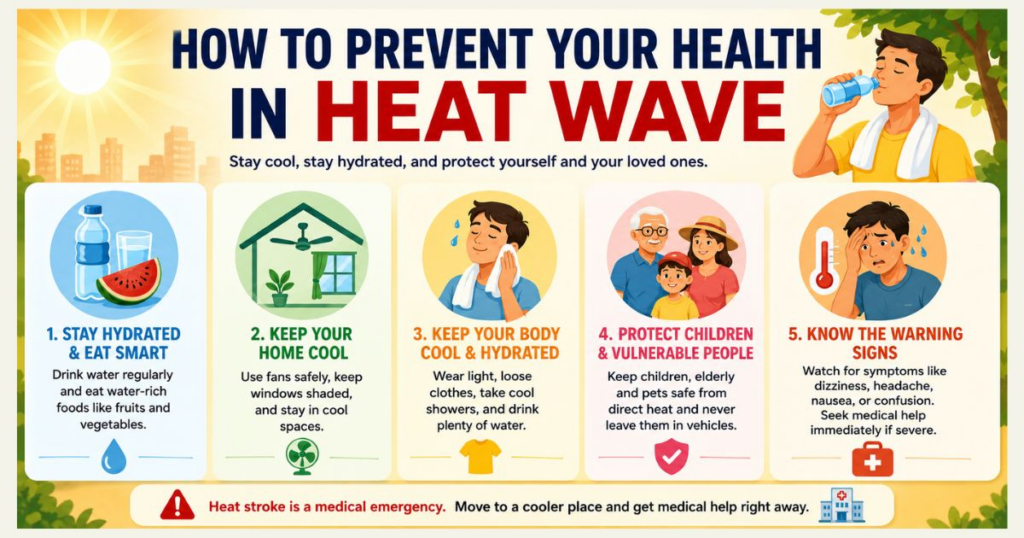
1. Stay Hydrated and Eat Smart
One of the biggest risks during a heat wave is dehydration. Your body loses water and electrolytes quickly through sweat, even when you are resting indoors. If you wait until you feel thirsty, you may already be mildly dehydrated.
What to do:
- Drink water regularly throughout the day, not only when thirsty.
- Carry a reusable water bottle when going outside.
- Increase fluid intake if you are sweating heavily.
- Choose water-rich foods such as watermelon, cucumber, oranges, strawberries, and lettuce.
- Eat light meals like salads, yogurt, fruits, or smaller portions more often. Heavy meals can increase body heat and make you feel tired.
- Limit alcohol, sugary soft drinks, and too much caffeine, as they may worsen dehydration.
2. Use Fans Safely and Keep Your Home Cool
Indoor heat can become dangerous, especially in poorly ventilated homes. Fans can help, but they should be used correctly.
How to cool your home:
- Open windows at night or early morning when outside air is cooler.
- During the day, close windows, curtains, or blinds to block sunlight.
- Turn off unnecessary lights and electrical devices that create heat.
Using fans safely:
- Fans work best when temperatures are below 40°C (104°F) by helping sweat evaporate and improving air circulation.
- When temperatures rise above 40°C, fans alone may blow very hot air onto the body and may not cool effectively.
- In extreme heat, combine a fan with cool showers, wet skin, mist spray, damp cloths, or air conditioning for better cooling.
- If using air conditioning, setting it around 27°C (81°F) and using a fan can improve comfort while reducing electricity use.
- Do not rely only on a fan if you feel dizzy, weak, or overheated. Move to a cooler place immediately.
3. Keep Your Body Cool and Hydrated
Your body loses water quickly through sweat, so staying hydrated is essential during hot weather.
What to do:
- Drink water regularly even if you do not feel thirsty.
- Aim for 1 cup of water per hour and around 2–3 litres per day, depending on your needs.
- Take cool showers or baths.
- Wet your skin with a damp cloth or wear light wet clothing.
- Wear loose, breathable clothing such as cotton or linen.
- Eat light meals such as fruits, salads, and yogurt instead of heavy foods.
4. Protect Children and Vulnerable People
Babies, children, older adults, and people with medical conditions are more sensitive to heat.
Important precautions:
- Never leave children or pets in parked vehicles.
- Keep infants and children out of direct sunlight during peak hours.
- Dress children in lightweight clothing, hats, sunglasses, and sunscreen.
- Never cover a stroller with thick dry fabric, as it traps heat inside. Use a thin wet cloth and allow airflow.
- Check regularly on elderly relatives, neighbors, or anyone living alone.
5. Know the Warning Signs of Heat Illness
Heat illness can become serious quickly.
Heat Exhaustion Symptoms:
- Heavy sweating
- Headache
- Dizziness
- Weakness
- Nausea
- Muscle cramps
Heat Stroke Warning Signs (Medical Emergency):
- High body temperature
- Confusion
- Hot dry skin or stopped sweating
- Rapid pulse
- Fainting
If heat stroke is suspected, move the person to a cooler place and seek emergency medical help immediately.
FAQ
1. How can I stay safe during a heat wave?
Drink plenty of water, stay indoors during the hottest hours, wear lightweight clothing, use fans or air conditioning, and avoid strenuous outdoor activities.
2. What are the signs of heat exhaustion?
Common symptoms include heavy sweating, dizziness, headache, nausea, muscle cramps, weakness, and cool, clammy skin. Move to a cool place and drink water if these occur.
3. What should I do if someone has heat stroke?
Heat stroke is a medical emergency. Move the person to a cooler area, cool them with water or wet cloths, and seek emergency medical help immediately.
4. Who is most at risk during a heat wave?
Children, older adults, pregnant women, people with chronic medical conditions, and outdoor workers are more vulnerable to heat-related illnesses.
5. How much water should I drink during hot weather?
Drink water regularly throughout the day, even if you do not feel thirsty. Most adults need about 2–3 litres of fluids daily, with more needed during extreme heat or heavy sweating.